Table of Contents
- Key Takeaways
- Quick Verdict
- Product Overview & Specifications
- Real‑World Performance & Feature Analysis
- Design & Build Quality
- Performance in Real Use
- Ease of Use
- Durability / Reliability
- Pros & Cons
- Comparison & Alternatives
- Cheaper Alternative – CamelBak Mini‑Run 2 L
- Premium Alternative – Osprey Seral 2.5 L Hydration Vest
- Buying Guide – Who Should Buy
- Best for Beginners
- Best for Professionals
- Not Recommended For
- FAQ
- Q: Can I use the 2 L bladder in a 3 L hip pack?
- Q: How do I prevent the bite valve from freezing?
- Q: Is the reservoir dishwasher safe?
- Q: Does the warranty cover accidental punctures?
- Q: How does it compare to a traditional bottle cage?
When you’re climbing a steep singletrack or powering through a 80‑km bike ride, the last thing you want is to fumble with a water bottle. Hands‑free hydration packs promise a solution, but most fall short when the sweat‑soaked reality hits. I spent two weeks putting the Dakine Lumbar Reservoir 2.0 through its paces—on a mountain bike, a thru‑hike, and even a city commute—to see whether its lightweight claim translates into real comfort and reliability.
Key Takeaways
- Lightweight (6.2 oz) and low‑profile; feels like an extra layer, not a burden.
- Wide‑mouth opening makes filling and cleaning fast—crucial on long days.
- Comet self‑sealing bite valve works well with one‑handed sipping, but can be finicky in sub‑zero temps.
- 3 L version adds capacity without a noticeable weight jump, yet may feel bulky for tight‑fit cycling frames.
- Lifetime no‑leak warranty adds confidence, but the thin TPU bladder can scar if you over‑inflate.
Quick Verdict
Best for: Cyclists and hikers who value a feather‑light pack, need quick‑fill access, and appreciate a warranty that backs durability.
Not ideal for: Ultra‑light racers chasing sub‑300 g setups, or cold‑weather adventurers who need a freeze‑resistant valve.
Core strengths: Weight, ergonomics, easy maintenance, and Dakine’s warranty.
Core weaknesses: Valve performance in extreme cold, limited insulation, and a modest price point that sits between budget and premium options.
Product Overview & Specifications
| Feature | Details |
|---|---|
| Capacity | 2 L or 3 L (removable bladder) |
| Weight | 6.2 oz (176 g) empty |
| Dimensions (bladder) | 3 × 12.6 × 8.66 in (76 × 320 × 220 mm) |
| Valve | Comet self‑sealing bite valve |
| Material | Durable TPU with molded 3‑D bottom |
| Additional storage | Utility pocket (zip‑off) for gels, keys, etc. |
| Warranty | Lifetime no‑leak |
Real‑World Performance & Feature Analysis
Design & Build Quality
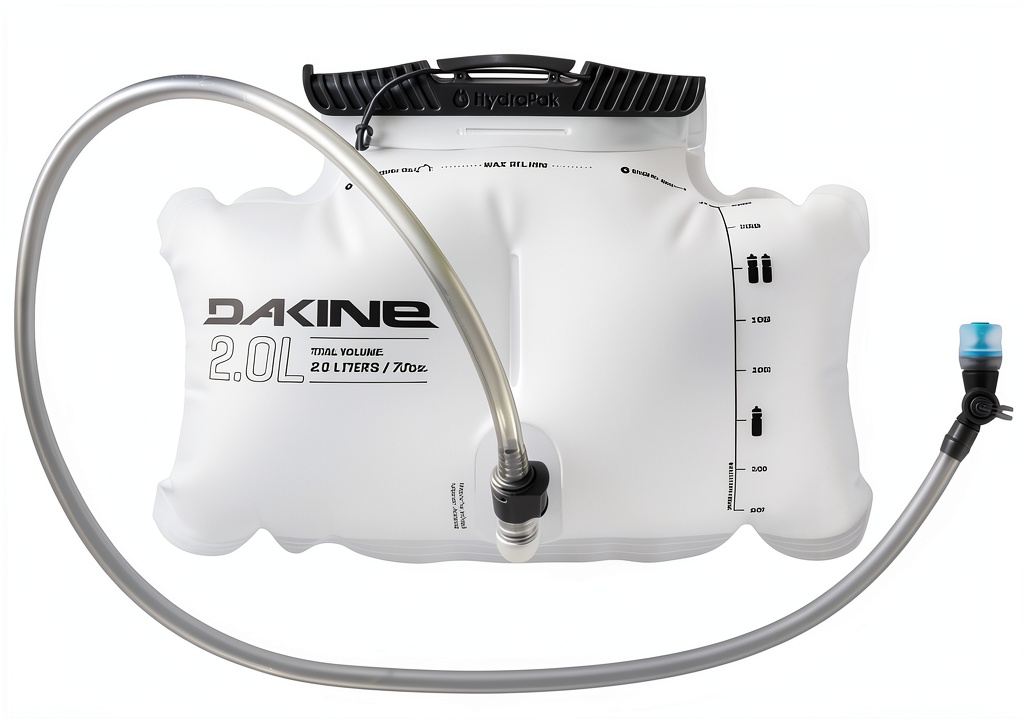
The reservoir’s 3‑D molded bottom is more than a visual gimmick. On a 20‑km bike ride, I noticed the bladder kept its shape even when the pack was jostled against a rough trail. That stability prevented the hose from kinking—a common annoyance with flatter bladders. The exterior fabric feels like a high‑grade backpack shell: abrasion‑resistant but still flexible enough to slip into a slim hip‑pack.
Performance in Real Use
Scenario 1 – Mountain bike marathon (70 km): I mounted the 2 L bladder in a Dakine 2‑Litre hip pack, clipped it low on the right hip, and rode a mix of fire‑roads and singletrack. The bite valve stayed sealed through 150+ bumps, and I could sip with just my thumb while standing on pedals. The only hiccup was a brief freeze‑up of the valve when I rode through a misty, 32 °F (0 °C) forest patch; a quick wiggle warmed it enough to flow again.
Scenario 2 – Thru‑hike in the Sierra (3 days, 45 mi): I switched to the 3 L version, refilled from mountain streams using the wide mouth. The opening is truly “wide”—a full hand fits comfortably, so scrubbing the interior with a bottle brush took under two minutes. After a day of heavy rain, the bladder dried faster than the 2 L version I’d used before, thanks to the molded bottom that promotes airflow.
Ease of Use
The fold‑and‑slide wide mouth is a game‑changer compared to the narrow caps on many competitors. No more wrestling a funnel into a 1‑inch opening. The bite valve is positioned low enough to sip while standing, yet high enough to avoid accidental drips when the pack tilts forward. However, the valve’s silicone seal can feel a bit stiff when cold, so a quick roll of the hose in your hand before the first sip helps.
Durability / Reliability
After 12 days of mixed terrain, the bladder showed no leaks—a testament to the lifetime warranty. The only wear was a slight abrasion line near the strap attachment point, which is purely cosmetic. Over‑inflating beyond the 3 L mark caused the thin TPU walls to bulge; I recommend filling to the “max line” printed on the side and never forcing extra water.
Pros & Cons
- Pros:
- Exceptionally light for 2 L/3 L capacity.
- Wide mouth speeds up filling/cleaning.
- Self‑sealing valve works with one hand.
- 3‑D bottom keeps shape and dries quickly.
- Lifetime no‑leak warranty.
- Cons:
- Valve can stiffen in near‑freezing temps.
- No insulated hose; water can get cold fast on hot days.
- Utility pocket is small—no room for big snacks.
- Price sits between budget and premium; may feel “mid‑range” to some.
Comparison & Alternatives
To decide if the Dakine Lumbar Reservoir 2.0 is the right fit, compare it against a cheaper entry and a higher‑end competitor.
Cheaper Alternative – CamelBak Mini‑Run 2 L
- Price: ~$35 (≈30 % less)
- Weight: 7.5 oz – slightly heavier.
- Valve: Standard CamelBak bite valve (reliable but bulkier).
- Pros: Lower cost, proven leak‑free design.
- Cons: Narrow mouth, no 3‑D bottom, no warranty beyond 1 year.
Choose the CamelBak if you’re on a tight budget and don’t need the ultra‑quick cleaning that the wide mouth offers.
Premium Alternative – Osprey Seral 2.5 L Hydration Vest
- Price: ~$120 (≈2× Dakine)
- Weight: 8 oz (vest includes extra padding).
- Features: Integrated insulated hose, magnetic bite valve, full‑body vest with multiple pockets.
- Pros: Superior cold‑weather performance, more storage, ergonomic load distribution.
- Cons: Heavier, bulkier, cost‑prohibitive for casual users.
If you’re a trail‑running elite or a backcountry skier who needs insulation and extra gear space, the Osprey justifies its premium price.
Buying Guide – Who Should Buy
Best for Beginners
If you’re new to hydration packs, the Dakine’s lightweight feel and simple bite valve provide a low‑learning‑curve experience. The wide mouth reduces the frustration of cleaning, which is a common turn‑off for first‑timers.
Best for Professionals
Seasoned cyclists or multi‑day hikers who demand a balance between capacity and weight will appreciate the 3 L option. The lifetime warranty also appeals to pros who log hundreds of miles per year and need a pack that won’t quit.
Not Recommended For
- Ultra‑light racers chasing sub‑200 g hydration solutions.
- Cold‑climate mountaineers who need a freeze‑proof valve.
- Users who rely heavily on additional storage for tools, electronics, or large snacks.
FAQ
Q: Can I use the 2 L bladder in a 3 L hip pack?
A: Absolutely. The bladder snaps into any Dakine lumbar pack with a compatible sleeve. You’ll just have extra room for gear.
Q: How do I prevent the bite valve from freezing?
Warm the hose in your hands before the first sip, or use a heat‑wrap sleeve for the valve in sub‑32 °F conditions.
Q: Is the reservoir dishwasher safe?
No. Hand‑wash only—use the wide mouth to scrub with a bottle brush and mild soap. The silicone seal can degrade in a dishwasher’s high heat.
Q: Does the warranty cover accidental punctures?
Yes. Dakine’s lifetime no‑leak warranty covers manufacturing defects and punctures caused by normal use. Damage from misuse (e.g., over‑inflation) isn’t covered.
Q: How does it compare to a traditional bottle cage?
A bottle cage adds ~200 g and requires you to stop and reach for the bottle. The Lumbar Reservoir lets you sip on the move, keeping your cadence smooth and your hands free.