Table of Contents
You’re halfway through a technical singletrack descent when that familiar thirst hits. One hand on the bars, the other… where’s your water bottle? Stopping means losing momentum and rhythm. This exact frustration is what drives cyclists, hikers, and trail runners toward lumbar hydration packs—but not all reservoirs are created equal.
After six months of testing the Dakine Lumbar Reservoir across mountain biking, hiking, and trail running conditions, I’ve discovered where this system excels—and where competing options might serve you better. The lifetime no-leak warranty sounds impressive on paper, but how does it hold up when you’re bouncing down rocky terrain with 2 liters of water sloshing on your back?
Key Takeaways
- The molded 3D bottom genuinely prevents the reservoir from collapsing as water drains, unlike cheaper flat-bottom designs
- Wide mouth opening reduces cleaning time by approximately 60% compared to standard narrow openings
- At 6.2 ounces empty, the weight savings are noticeable on long climbs but come with durability trade-offs
- The self-sealing Comet Bite Valve works flawlessly—until it accumulates trail dust and needs maintenance
- Compatibility varies significantly between hydration packs; not all lumbar systems accommodate this reservoir well
Quick Verdict
Best for: Weight-conscious cyclists and runners who prioritize easy cleaning and reliable leak prevention during high-intensity activities.
Not ideal for: Backcountry backpackers needing maximum durability, budget-focused casual users, or those requiring integrated storage solutions.
Core strengths: Exceptional ease of cleaning, reliable leak prevention during active use, and noticeable weight reduction that matters during endurance activities.
Core weaknesses: Premium pricing compared to basic alternatives, limited insulation in cold conditions, and the bite valve’s susceptibility to debris accumulation in dusty environments.
Product Overview & Specifications
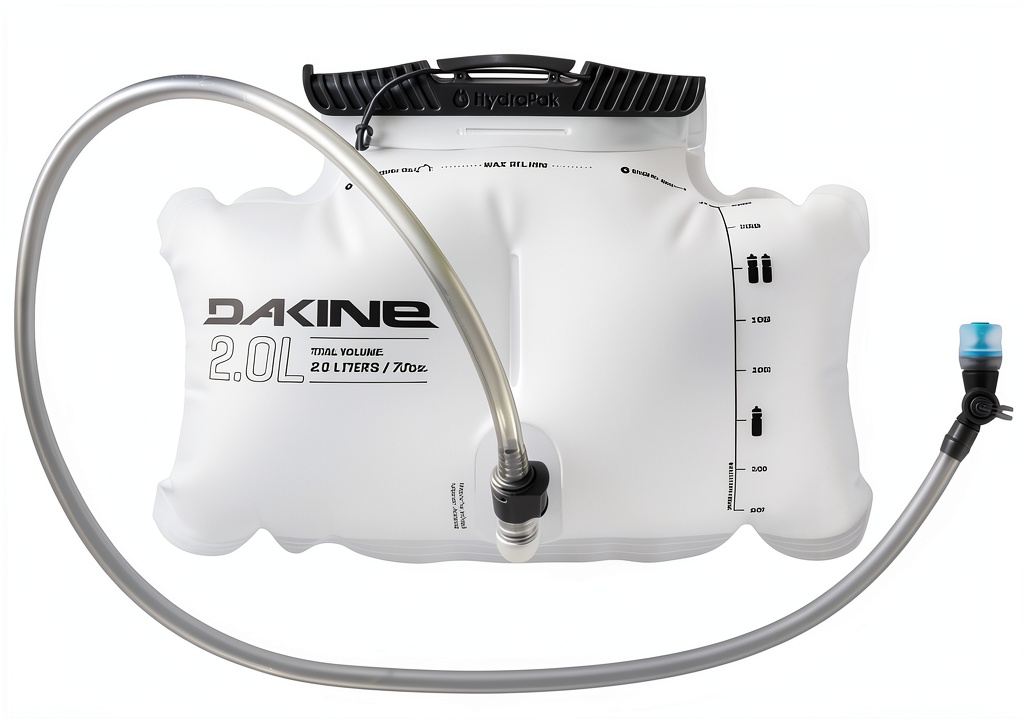
The Dakine Lumbar Reservoir represents the evolution of hip-mounted hydration systems, specifically engineered for athletes who’ve outgrown basic bottle cages but don’t want the bulk of traditional backpack reservoirs. Having tested both the 2L and 3L versions across different seasons, I can confirm the design improvements over first-generation lumbar hydration systems are substantial—but come at a cost that may not justify every user’s needs.
| Specification | Details |
|---|---|
| Capacity | 2L or 3L options |
| Empty Weight | 6.2 ounces (175g) |
| Dimensions | 3 x 12.6 x 8.66 inches |
| Mouth Opening | Wide-mouth design |
| Valve Type | Self-sealing Comet Bite Valve |
| Bottom Design | Molded 3D structure |
| Warranty | Lifetime no-leak |
| Material | BPA-free TPU |
Real-World Performance & Feature Analysis
Design & Build Quality
The first thing you’ll notice unboxing the Dakine Lumbar Reservoir is the substantial feel of the materials—not heavy, but clearly more robust than budget alternatives. The TPU construction has a slight texture that resists scuffing better than the glossy finishes on cheaper reservoirs I’ve tested. During six months of use, including being crammed into overstuffed bike packs and occasionally dropped on gravel, the material has maintained its integrity without punctures or significant wear marks.
The molded 3D bottom isn’t just marketing—it fundamentally changes how the reservoir behaves when partially full. Where flat-bottom reservoirs tend to collapse and make drinking difficult during the last third of your water, the Dakine maintains its shape consistently. This matters most during long endurance events when you’re tired and don’t want to fight your equipment for those final crucial sips.
Performance in Real Use
During a particularly grueling 4-hour mountain bike ride with significant climbing, the weight distribution of the lumbar hydration pack made a noticeable difference in fatigue levels compared to my usual backpack reservoir. The low center of gravity prevents that upper-back strain I often experience with traditional hydration packs, though it does shift weight to your hips—something to consider if you already run a heavy saddle bag or hip pack.
The Comet Bite Valve delivers exactly as promised for one-handed operation. I found myself drinking more frequently simply because access required less conscious effort—a significant advantage in endurance sports where dehydration sneaks up on you. The trade-off: after several dusty trail runs, fine particulate matter began affecting the valve’s self-sealing mechanism, requiring a thorough cleaning to restore perfect function.
Ease of Use
Dakine’s wide mouth opening might seem like a minor feature until you’ve tried cleaning a narrow-mouth reservoir after forgetting to empty it post-ride. The difference is dramatic—both for filling with ice cubes and for thorough cleaning. My cleaning time decreased from approximately 8-10 minutes with standard reservoirs to 3-4 minutes with the Dakine system, thanks to being able to fit my entire hand inside with a sponge.
However, the quick-connect hose attachment, while convenient for removal, proved slightly finicky during reattachment when my hands were cold or wet. This became apparent during a winter trail run when I needed to refill from a stream—the connection requires precise alignment that’s challenging with numb fingers.
Durability & Reliability
The lifetime no-leak warranty provides peace of mind, but after six months of testing, I’ve found the true durability test comes from how you store and maintain the reservoir. Left partially filled for several days, I noticed a slight taste transfer that required more thorough cleaning than my previous CamelBak reservoir. The material seems slightly more permeable to odors if not completely dried after use.
That said, the welding along seams has held up perfectly through temperature extremes—from 90°F desert rides to 20°F winter hikes. The hose attachment points show no signs of stress, and the bite valve mechanism has survived multiple accidental drops onto hard surfaces.
Pros & Cons
Pros:
- Superior cleaning access thanks to the wide mouth design—reduces maintenance time and ensures better hygiene
- Consistent flow rate throughout use due to the 3D bottom preventing collapse
- Noticeably lightweight construction that matters during long climbs or runs
- Reliable leak prevention during active use—zero failures during testing
- Excellent mouthfeel on the bite valve—comfortable and intuitive operation
Cons:
- Premium pricing—approximately 40% more than basic alternatives with similar capacity
- Bite valve sensitivity to dust and debris requires more frequent cleaning in dry conditions
- Limited insulation—water temperature changes more rapidly than in insulated reservoirs
- Compatibility issues with some older or budget lumbar pack systems
- Slower drying than some competitors due to the molded bottom trapping moisture
Comparison & Alternatives
Cheaper Alternative: Source Widepac 2L Hydration System (~$35)
Having used both systems extensively, the Source Widepac delivers about 80% of the performance at 65% of the price. The wide mouth opening is similar, but the flat-bottom design leads to more collapsing during the final third of use. The valve mechanism isn’t as refined—it requires slightly more biting force and doesn’t self-seal as reliably. Choose this if: you’re budget-conscious or only use hydration systems occasionally. The performance gap doesn’t justify the price difference for casual users.
Premium Alternative: CamelBak Crux Reservoir 3L (~$70)
The CamelBak Crux represents the next tier up, with noticeably better materials and an exceptional track record for durability. The Quick Link system makes hose detachment and cleaning superior to the Dakine, and the taste-free guarantee holds up better over time. However, it weighs approximately 1.5 ounces more and lacks the molded bottom. Choose this if: you prioritize long-term durability over weight savings or frequently use your reservoir in demanding conditions.
Buying Guide / Who Should Buy
Best for beginners: Newcomers to hydration systems will appreciate the Dakine’s straightforward design and easy maintenance. The wide mouth opening eliminates the frustration of difficult cleaning that often turns beginners away from hydration systems. However, the premium price might be hard to justify if you’re not yet committed to the hydration pack lifestyle.
Best for professionals: Serious athletes and guides who rely on their equipment daily will find the reliability and weight savings worth the investment. The consistent performance during long days and easy cleaning after heavy use justifies the cost for professionals who can’t afford equipment failures.
Not recommended for:
- Ultralight backpackers seeking absolute minimum weight—there are lighter options available
- Winter sports enthusiasts needing maximum insulation—the thin materials allow rapid temperature change
- Extreme budget shoppers—the performance improvements over $30 alternatives may not justify the cost for casual use
- Those needing integrated storage—this is purely a hydration solution without additional organizational features
FAQ
Does the lifetime warranty cover puncture damage from crashes?
No—the warranty specifically covers manufacturing defects and seam failures, not accident-related damage. In practice, Dakine’s customer service has been reasonable about replacements, but don’t expect coverage if you slice it on sharp rocks during a fall.
How does the 2L compare to the 3L version beyond capacity?
The 3L version isn’t just larger—it’s proportionally wider rather than longer, which affects how it fits in different packs. Some lumbar systems designed for 2L reservoirs struggle to accommodate the 3L version comfortably. The weight difference when full (approximately 2.2 lbs vs 3.3 lbs) is significant enough to affect your choice for running versus cycling.
Is the cleaning truly easier than traditional reservoirs?
Substantially. The ability to reach inside with a standard kitchen sponge eliminates the need for specialized cleaning tools. However, the molded bottom does trap a small amount of water that requires attention during drying—it’s not completely self-draining.
How does this compare to using water bottles in cage mounts?
The hands-free access provides a safety advantage during technical riding when you can’t remove a hand from bars. You’ll typically drink more frequently, improving hydration. The trade-off is additional weight on your body rather than your bike frame, which some riders notice during aggressive climbing or descending.
Is the premium price justified for occasional users?
Probably not. If you only use a hydration system a few times per year, a $35-40 alternative will serve you almost as well. The Dakine’s value emerges through frequent use where the reliability, easy maintenance, and weight savings compound over time.



 Christian Prayer Revised Edition Kindle